You’ve just got the keys. The boxes are in. And within 48 hours, something doesn’t work.
Maybe the bedroom door scrapes the floor every time you close it. Maybe the shelf bracket is hanging off the wall the previous tenant left behind. Or you’ve just spent three hours on an IKEA wardrobe only to realise the back panel is bulging because the floor isn’t level. Welcome to moving into a London flat.
This isn’t bad luck. This is almost every London renter’s first week. And most people don’t know what to tackle first, who’s responsible for what, or when to just call someone.
This checklist gives you the full picture – room by room, no fluff.
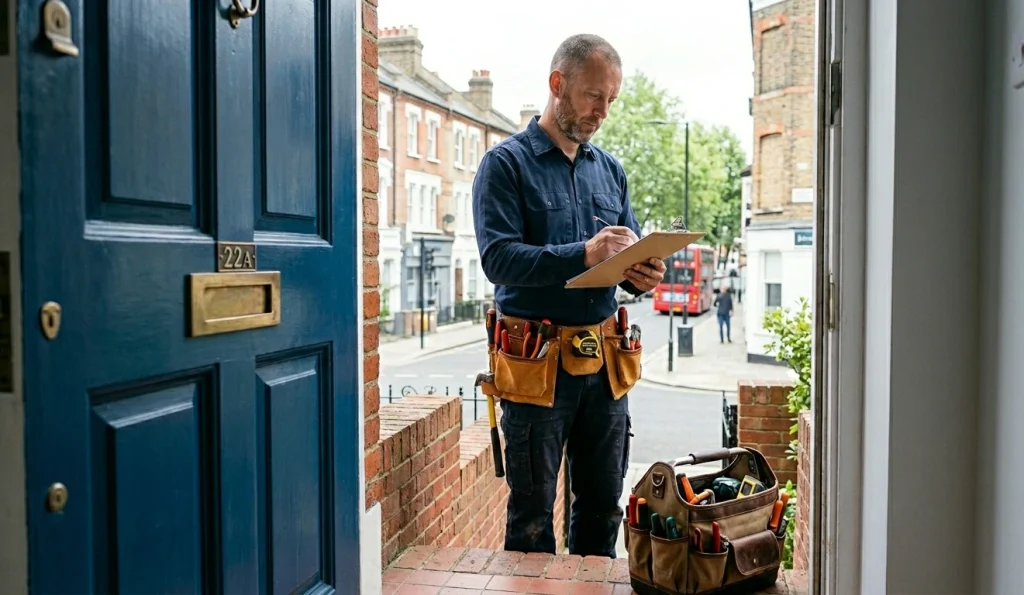
The First Week: What Actually Needs Sorting
The instinct is to ignore the small stuff and settle in first. That’s how small problems turn into annoying, expensive ones.
Here’s what to check in the first seven days:
Living room and hallway:
Door alignment – does it close without force or drag? Test every internal door. Check curtain rail fixings – they come away from plasterboard constantly in older London builds. Assess any TV wall mount points left by previous tenants (not all of them are safe to reuse).
Bedroom:
Wardrobe and drawer assembly if you’re bringing a flat-pack. Wall fixings for shelving. Blind and curtain fitting – these seem easy until you hit a steel lintel or a tiled reveal.
Kitchen and bathroom:
Bath and sink sealant. It deteriorates fast in London’s damp climate and it’s a genuine damp and mould risk if left. Cabinet hinges. Towel rail fixings. These are the kind of jobs that take 20 minutes with the right tools and an hour of frustration without them.
Landlord's Job vs Yours - Get This Right From Day One
This is where most London renters get it wrong, and it creates real tension fast.
The landlord is responsible for:
the structure of the building, all water systems and pipes, heating, and anything that was there when you moved in and is now broken through fair wear and tear.
You are responsible for:
anything you’re adding, changing, or assembling yourself. Shelves, furniture, TV mounts, curtain poles, picture hooks – all of it is on you. Lightbulbs are yours too.
If something was broken when you arrived, document it on day one. Photos with timestamps. Sent to the landlord in writing. This protects your deposit and removes all ambiguity.
One more thing: if the landlord’s handyman doesn’t show up after two attempts, that’s a pattern, not a coincidence. You’re well within your rights to find someone reliable and invoice it, if your tenancy agreement allows – worth checking.
The Full Move-In Handyman Checklist (Room by Room)
Use this on week one. Tick off what’s done, flag what isn’t.
- All internal doors open and close smoothly
- Door handles and locks working correctly
- Curtain rails and poles – secure and level
- TV wall mount (new or repurposed) – checked for safe fixing points
- Shelving – measured, fixed to the right wall type with correct plugs
- Flat-pack furniture assembled (including wardrobe internal fittings)
- Blinds fitted – especially in kitchens and bathrooms
- Mirror and picture hanging – particularly in plasterboard walls
- Bathroom sealant – tub, shower tray, and sink
- Towel rails and bathroom cabinet fixings
- Cabinet hinges adjusted throughout
- Garden gate or fencing if applicable (especially in South East London properties)
If you’re in South East London – handyman Lewisham and handyman Blackheath searches spike significantly around March, June, and September when rental turnover is highest. That tells you how common this list really is.
London Flat Types and Why They Matter
Not all London flats behave the same. Wall types vary enormously, and the wrong fixing in the wrong wall causes real damage.
Victorian and Edwardian terraces (common across Lewisham, Blackheath, and Southwark):
Solid brick walls. You can hang almost anything if you use the right masonry drill and plugs. But they’re cold and damp-prone – check for any existing damp before you hang things on external walls.
1960s–80s concrete or panel builds:
These need specialist fixings. Standard rawlplugs won’t grip. Anything heavy needs to be assessed carefully. Handyman Southwark and Lewisham handyman service calls are heavily weighted towards these older conversion blocks.
New builds and recent conversions:
Mostly plasterboard stud walls. They look solid but most can’t take more than 5–10kg without proper cavity fixings. The number of shelves that come off new build walls in the first month is, frankly, embarrassing.
If you’re in Eltham or the surrounding areas, handyman Eltham searches often relate to 1970s and 80s semi-detached properties where internal layouts have been converted to flats, and wall types are genuinely unpredictable.
What a Good Handyman Visit Actually Looks Like
Here’s something nobody tells you before you book: there are signs within the first five minutes of an arrival that tell you whether this person knows what they’re doing.
A professional will check your wall type before drilling. They’ll ask where you want things, confirm placement before fixing, and use a detector for cables and pipes. They arrive with a proper kit – not just a drill and a bag of random screws. And when they leave, they take their mess with them.
If someone arrives, starts drilling immediately without checking the wall, and leaves dust everywhere – that’s not just bad service. That’s a sign the work might not hold. A reliable handyman service in London isn’t just about getting the job done. It’s about getting it done in a way that lasts.
Batch Your Jobs - It's the Smarter Way to Book
One thing experienced London renters learn fast: don’t book a handyman for one thing at a time.
Most professional handymen work on a minimum call-out basis. So if you’ve got six jobs – shelves, blinds, TV mount, bathroom sealant, a door that drags, and a cabinet hinge – get them all done in one visit. It saves everyone’s time, it’s more efficient, and you get everything sorted before you’re actually living in the space properly.
Make the list before you call. Walk every room. Write down everything. Then book one proper session and get it all handled at once.
Moving into a London flat is one of those experiences that exposes exactly how much you didn’t know you’d need to sort. But it doesn’t have to pile up. Get the list together, know what’s yours to deal with, and handle it properly the first time.
Paint & Handy covers all of this across London, from the first shelf to the full move-in overhaul.
FAQs
What’s the difference between a handyman and a specialist tradesperson?
A handyman handles a wide range of small to mid-sized jobs across multiple trades – carpentry, plumbing, fixtures, painting – while a specialist focuses on one trade for larger or regulated work.
What jobs can a handyman do during a flat move-in?
Furniture assembly, shelving installation, TV wall mounting, curtain rail fitting, picture hanging, door alignment, and bathroom accessory fitting are all typical move-in handyman jobs.
Can I book a handyman to do several small jobs in one visit?
Absolutely. Batching multiple jobs into one visit is more efficient and is exactly how most Londoners use a handyman service after moving in.
What’s the difference between what a landlord must fix and what’s your responsibility?
Landlords are responsible for structural issues, plumbing, heating, and pre-existing electrical faults. Tenants are responsible for anything they bring in, install, or choose to hang or modify.
Do I need to tell my landlord before I put up shelves or mount a TV?
Yes, most tenancy agreements require written permission before making fixings to walls. Most landlords will agree, and asking protects your deposit when you leave.
What is a snagging list and does it apply to rented flats? A snagging list is a record of defects in a property at the time you move in. Renters should document any existing issues on arrival – it protects you if there is a deposit dispute at the end of the tenancy.
