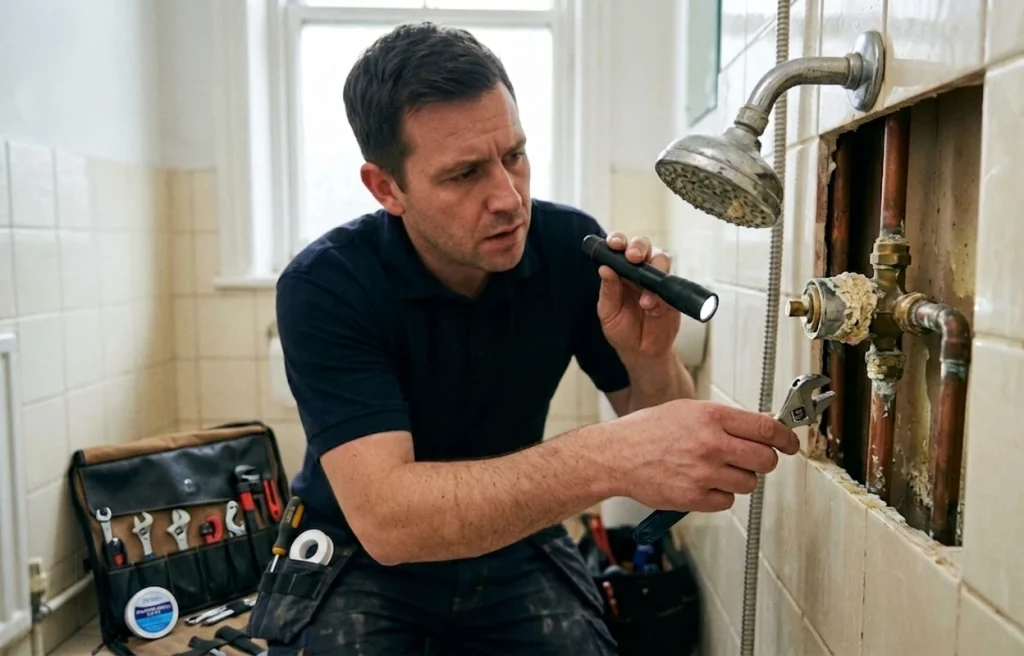
You turn on the shower, and what comes out feels like someone is gently weeping at you from a pipe. Sound familiar? Low water pressure in London is one of those daily frustrations that Londoners quietly put up with and really, really shouldn’t have to.
Here’s the thing: this isn’t just bad luck. London’s combination of Victorian pipework, extremely hard water, and shared building supplies creates a perfect storm for weak water pressure. And if you’re in South London Greenwich, Lewisham, Norwood, Southwark your property may well be sitting on plumbing that’s been quietly deteriorating for over a century.
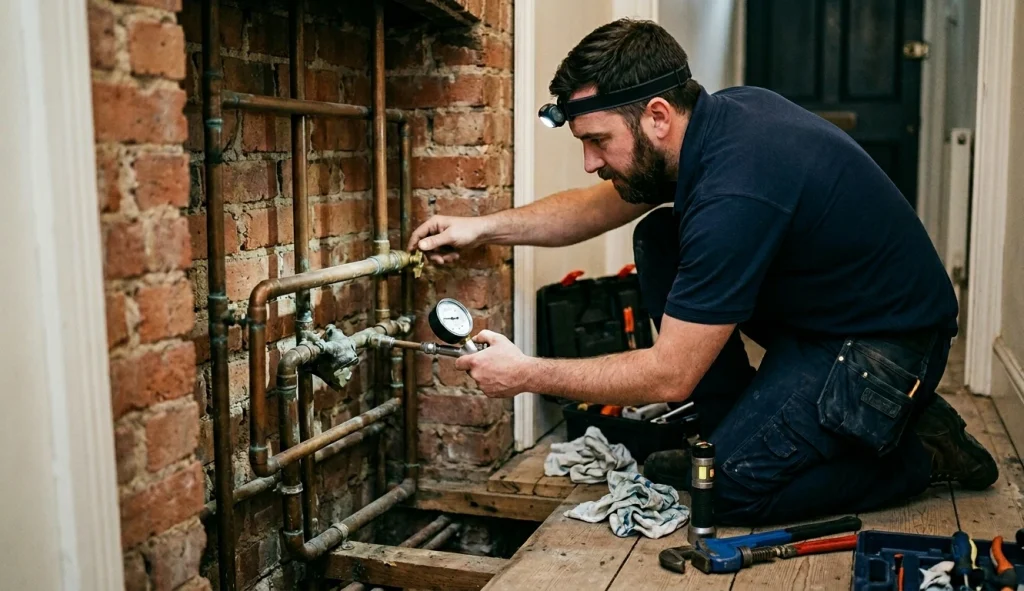
What "Low Water Pressure" Actually Means in Your Home
Most people just know the feeling it takes forever to fill a bath, the shower is limp, and the kitchen tap barely makes a dent. But what counts as actually low pressure?
Normal mains pressure in the UK sits between 1 and 4 bar. Thames Water is required to deliver at least 1 bar at your stop tap, with a minimum flow of around 9 litres per minute. If you’re below that, you’re technically entitled to report it directly to Thames Water as a mains supply issue.
A quick way to check at home: hold a one-litre jug under your kitchen cold tap and count how many seconds it takes to fill. Under 6 seconds is fine. Over 10 seconds, and something is restricting your flow.
The 7 Reasons Your London Home Has Low Pressure
1. Limescale Buildup London’s Biggest Culprit
London’s water is classified as “very hard” by Thames Water, sitting at around 293 ppm of calcium carbonate. That limescale doesn’t just form on your kettle – it silently narrows your pipes from the inside over years, squeezing your flow rate down to a trickle without you even noticing until it’s quite bad.
2. Victorian and Edwardian Pipework
A huge proportion of South London’s housing stock dates back to before the 1970s. Many terraces and converted houses in areas like Lewisham, Norwood, and Greenwich were originally fitted with lead or galvanised steel pipes. These corrode internally, restrict flow, and in the case of lead pipes, raise serious health concerns. They simply were not designed for modern water usage demands.
3. A Partially Closed Stop Tap
This is the easiest fix that most people overlook. Your stop tap usually found under the kitchen sink or where the mains enters the property may have been turned back only partially after a repair job. Even being a quarter-turn closed can noticeably reduce pressure throughout the whole home.
4. A Hidden Leak in the System
A leak you cannot see steals pressure before the water ever reaches your tap. Do the water meter test: turn off every tap and appliance in the house, note your meter reading, and check it again after 30 minutes. If it has moved, water is going somewhere it should not. Unexplained damp patches on walls or ceilings alongside low pressure are a combination worth taking seriously.
5. Shared Building Supply in Flats and Conversions
If you are in a converted house or purpose-built flat extremely common across South London your building likely shares a single supply pipe with multiple units. During peak hours, when everyone is showering before work, pressure drops for everyone. This is a structural issue with the building, not your individual plumbing, and it often requires a pressure booster pump as the long-term fix.
6. A Failing Pressure Reducing Valve
Some London properties, particularly those closer to the mains or on commercial streets, have a pressure reducing valve (PRV) fitted at the point the water enters the building. These can wear out over time and rather than simply regulating pressure, end up reducing it far too aggressively. A plumber can test and replace this in a single visit.
7. Blocked Showerheads and Tap Aerators
The hardest water in England runs through London taps. Aerators, those small mesh filters on your tap spouts and showerheads are prime limescale targets. Soaking them in white vinegar overnight often clears a mild blockage. If vinegar does not shift it, the limescale may have penetrated deeper into the fitting itself.
What You Can Check Before Calling a Plumber
Before picking up the phone, run through these five checks yourself:
- Do the one-litre jug test to confirm you actually have low flow, not just a slow hot water supply.
- Locate your stop tap and make sure it is fully open, turn it anticlockwise as far as it goes.
- Soak your showerhead and any tap aerators in white vinegar for a few hours, then rinse and refit.
- Ask a neighbour in your building whether they have the same issue. If they do, it is a shared supply problem.
- Run the water meter test with all taps off to rule out a hidden leak somewhere in the system.
If any of these raise a red flag, that is when it is worth getting a professional involved.
When You Need a Plumber
Some pressure problems genuinely need expert hands. If pressure is low throughout the whole property and not just one tap, if your home was built before 1970 and has never had its pipes inspected, if your water meter keeps moving with everything off, or if you are noticing damp patches alongside the low pressure these are signs of a systemic issue that a DIY fix will not resolve.
If you are in South London and want a proper diagnosis rather than guesswork, Paint & Handy’s plumbing services in London cover Greenwich, Lewisham, Southwark, Norwood and surrounding areas. The team handles everything from leak detection and pressure booster installation to full pipe replacement in Victorian properties, the kind of work that actually fixes the root problem.
Protecting Your Plumbing Long-Term
Once the immediate issue is sorted, a few steps will prevent it from returning. A scale inhibitor fitted at the mains entry is one of the best investments you can make in a London property – it dramatically slows limescale accumulation across your entire pipe network. Annual plumbing inspections catch small problems before they quietly worsen over winter. If your property still has lead or galvanised steel pipes, a full pipe upgrade to modern copper or plastic is worth planning for, particularly in pre-1970 South London terraces. And cleaning your tap aerators every few months takes five minutes and keeps your flow consistent year-round.
For anything beyond a basic blockage, Thames Water also has an online tool to report low water pressure if you believe the problem originates from the mains supply rather than inside your home.
Low water pressure in London has specific, local causes that generic guides consistently miss Victorian pipes, water hardness above 290 ppm, and shared building supplies all play a real role. Most of these problems have clear solutions, but finding the right one depends on knowing what you are actually dealing with.
If you want a proper assessment rather than a process of elimination, Paint & Handy works across London with the hands-on knowledge of what South London properties actually look like inside the walls. Get in touch for a quote and stop putting up with a shower that barely does its job.
FAQs
Why is my water pressure low in my London flat? The most common reasons are limescale buildup in pipes, a shared supply with other flats, or Victorian-era pipework that has corroded internally over decades.
Can limescale cause low water pressure? Yes. London’s hard water at around 293 ppm deposits calcium inside pipes and fixtures over time, gradually narrowing them and reducing flow rate significantly.
Does low water pressure mean I have a leak? It can, but not always. Run the water meter test, turn everything off, note the reading, and check again after 30 minutes. Any movement suggests a hidden leak somewhere in the system.
Is low pressure in the morning normal in London flats? It is common in buildings with a shared supply pipe, where peak demand from multiple flats simultaneously drops pressure for everyone. A pressure booster pump can fix this permanently.
