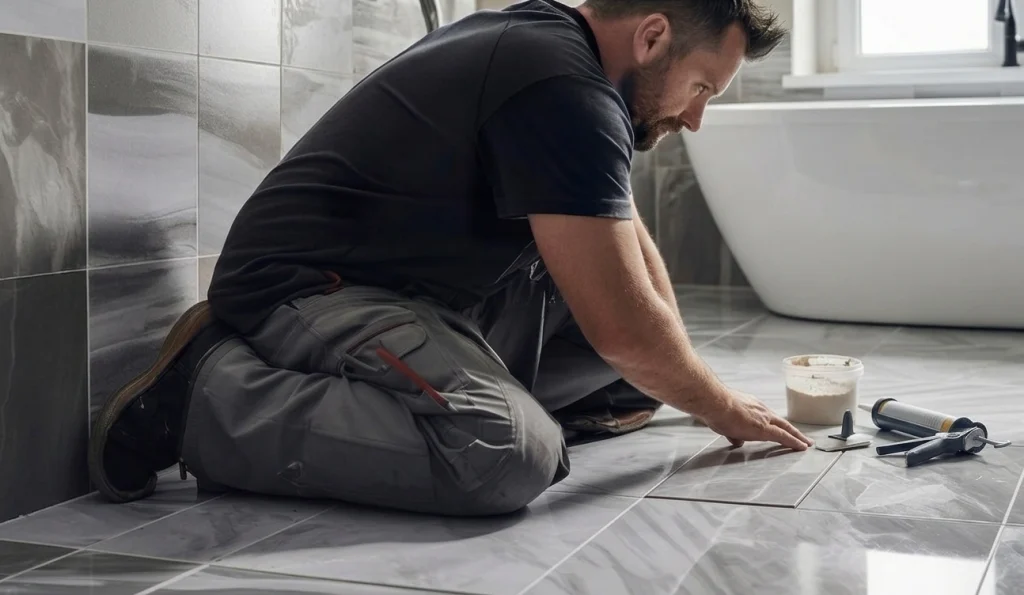
You notice it first as a hairline crack. Then a grout line goes grey, then black. Then one morning, a tile shifts under your hand. If you own or rent a property in London, this story is frustratingly familiar.
London bathrooms take a real beating. The city’s damp climate, Victorian-era housing stock, and the constant cycle of hot showers all put tiles under pressure most people don’t account for. The damage rarely announces itself loudly. It creeps in, quietly, until it’s a structural problem.
What’s Actually Causing Your Bathroom Tiles to Crack?
Cracked bathroom tiles in London almost always trace back to movement beneath the surface, not the tile itself. Period properties across Southwark, Lewisham, and Greenwich are particularly prone because their original timber subfloors flex over time. When the floor moves, the adhesive bond breaks, and the tile takes the stress.
Common causes include:
- Inadequate substrate preparation during original installation
- No movement joints between tile runs (a standard violation in older flats)
- Thermal expansion from underfloor heating fitted without expansion gaps
- Impact damage from dropped items in small, hard-surfaced rooms
One cracked tile is fixable. But if you tap surrounding tiles and hear a hollow sound, that means the adhesive has failed across a wider area. That is no longer a patch job. Replacing individual tiles while ignoring the base problem will get you back to the same issue within 12 to 18 months.
Why Does Grout Go Black and Is It Actually Mould?
Yes, in most cases, black grout in London bathrooms is mould. Cladosporium and Aspergillus are the two most common species found in bathroom grout, and both thrive in the humidity levels typical of inner-London flats with poor ventilation. The NHS links sustained mould exposure to respiratory issues, particularly in children and people with asthma.
Grout is porous by nature. Standard cement-based grout absorbs moisture, organic residue, and soap scum, creating the exact environment mould needs. A grout pen will colour over it temporarily. It will not kill the mould colony underneath or seal the grout against future growth.
Signs you need more than cleaning:
- Grout that stains again within 2 to 4 weeks of cleaning
- Soft or crumbling grout lines when pressed
- Mould reappearing despite bleach treatments
- Discolouration spreading toward the tile face itself
Regrouting with epoxy grout in wet zones eliminates this pattern. Unlike cement grout, epoxy grout is non-porous, does not absorb water, and resists mould growth at the surface level.
Why Are London Homes Especially Vulnerable to Tile Problems?
London’s housing stock is unusually old. A large proportion of properties across boroughs like Hackney, Lambeth, Islington, and Tower Hamlets are Victorian or Edwardian builds, often converted into flats with minimal structural upgrades. Original bathroom installations in these properties rarely used waterproof tanking membranes behind tiles. That was not standard practice decades ago.
The result is moisture penetrating the wall or floor substrate unchecked. Over years, that moisture degrades the tile adhesive, causes efflorescence (white mineral deposits on tile surfaces), and eventually pushes tiles loose from the wall entirely.
London’s humidity levels, averaging around 76% annually, compound this. A bathroom without mechanical ventilation in a period conversion is a tile failure waiting to happen. This is the root cause most DIY guides miss entirely, because they focus on the tile rather than what sits behind it.
Can You Actually Fix This Yourself?
Surface grout cleaning, yes. Structural tile problems, no. That is the honest line.
A grout pen will mask discolouration for a few weeks. Proprietary mould sprays will suppress surface growth temporarily. For anything beyond cosmetic maintenance, the fix requires removing existing grout entirely, assessing the substrate, and reapplying correctly specified materials.
DIY regrouting without proper surface preparation typically fails within 6 months. Incorrectly mixed grout, residual mould beneath, or moisture still present in the substrate all cause the new grout to crack, stain, or separate.
If your tiles are loose, cracked, or hollow-sounding, the adhesive behind them needs to be assessed. Attempting to re-bond loose tiles with grab adhesive without clearing the old bed is one of the most common mistakes that leads to repeat callouts.
For London homeowners dealing with anything beyond surface staining, the professional tiling services in London from Paint & Handy cover full assessment, substrate repair, waterproof tanking, and regrouting with correctly rated materials for wet room environments.
What Does a Professional Tiler Do That You Can’t?
The difference is substrate knowledge and correct material specification.
A professional tiler working to Tile Association UK standards will:
- Tap-test all tiles to map adhesive failure before touching anything
- Remove failed grout fully using an oscillating multi-tool rather than a manual scraper
- Assess whether waterproof tanking membrane is present and intact
- Use flexible, moisture-resistant tile adhesive rated for wet zones (typically C2 classification)
- Apply epoxy or polymer-modified grout in shower areas rather than standard cement grout
- Install silicone movement joints at all internal corners, a detail almost universally skipped in older installations
Paint & Handy is City and Guilds registered, which means tiling work meets trade-standard specifications, not general handyman-level repair. That matters when you are dealing with a bathroom that feeds water into shared walls or floors in a converted flat.
Frequently Asked Questions
How often should bathroom grout be replaced? In a regularly used London bathroom, grout should be inspected every 3 to 5 years and replaced when it shows crumbling, persistent staining, or visible mould that survives cleaning.
Is hollow-sounding tile a serious problem? Yes. A hollow sound when tapped means the adhesive bond has failed, and that tile will eventually crack or come loose entirely.
Can cracked bathroom tiles cause water damage? Absolutely. Cracked tiles allow water to reach the substrate behind, which can damage plasterboard, cause damp in adjoining rooms, and lead to structural issues over time.
When should I regrout instead of re-tile completely? Regrouting is sufficient when tiles are structurally sound and the substrate is dry and intact. If tiles are loose, cracked, or the wall behind is damp, re-tiling is the correct fix.
Does bathroom mould in grout affect health? Yes. The NHS confirms that mould exposure can cause or worsen respiratory conditions, skin irritation, and allergic reactions, particularly in children and people with existing health issues.
What type of grout is best for a London bathroom shower? Epoxy grout is the professional standard for wet zones. It is non-porous, mould-resistant, and does not absorb water the way standard cement grout does.
How long does professional bathroom regrouting take? A standard London bathroom typically takes one full working day to regrout professionally, including drying time before the shower or bath can be used again.
If any of this sounds like your bathroom right now, you are not dealing with a cosmetic issue. You are dealing with a building fabric problem that will worsen. The Paint & Handy team works across London and can assess, quote, and fix bathroom tiling properly, the first time.
