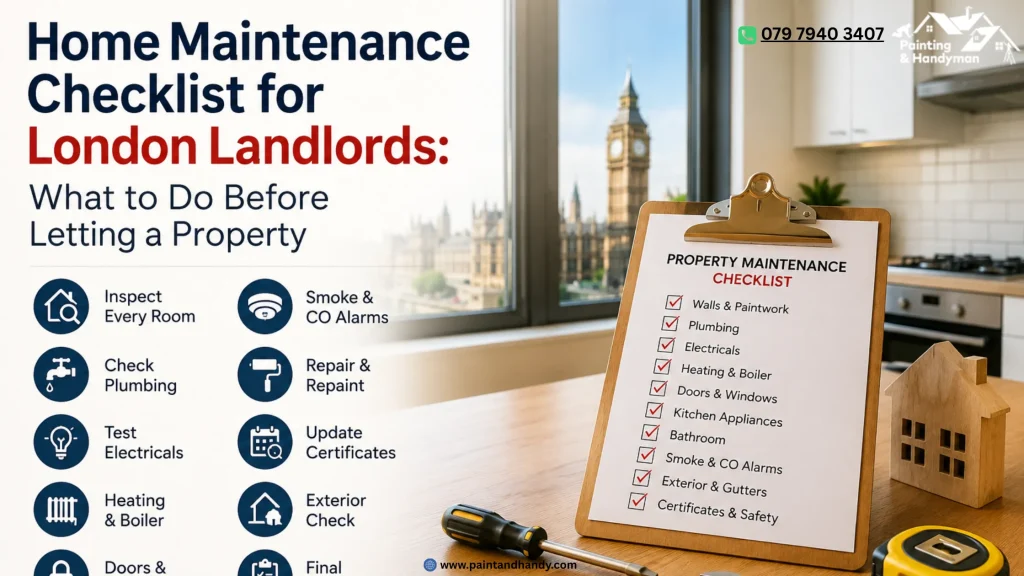
Are you about to rent out your London property and wondering if it’s truly ready for new tenants?
Before handing over the keys, it’s worth taking the time to inspect every part of your property. A well-maintained rental home attracts better tenants, helps prevent expensive repairs, and supports your legal responsibilities as a landlord.
Quick Answer
Before letting a property in London, landlords should inspect the home’s condition, complete any necessary repairs, test safety equipment, check plumbing and electrical systems, refresh worn interiors, and confirm that all required certificates are up to date. A detailed maintenance checklist helps protect your investment, improves tenant satisfaction, and reduces the risk of unexpected problems during the tenancy.
Why Property Maintenance Matters Before Letting
Many landlords focus on finding tenants quickly, but preparing the property properly is just as important.
A rental property in excellent condition can:
- Create a positive first impression
- Help attract responsible tenants
- Reduce maintenance requests after move-in
- Protect the property’s long-term value
- Lower the chance of emergency repair costs
- Support compliance with landlord responsibilities in England
According to GOV.UK, landlords are responsible for keeping rented properties safe, free from health hazards, maintaining gas and electrical installations, providing an Energy Performance Certificate (EPC), and meeting fire safety requirements.
Home Maintenance Checklist Before Letting Your Property
Use this checklist before every new tenancy.
| Area | Check Before Letting |
| Walls & Ceilings | Repair cracks, stains, peeling paint |
| Plumbing | Fix leaks and test water pressure |
| Electrical | Check sockets, switches and lighting |
| Doors & Windows | Test locks, hinges and seals |
| Heating | Test boiler and radiators |
| Flooring | Repair damaged flooring or loose tiles |
| Kitchen | Check cabinets, taps and appliances |
| Bathroom | Inspect grout, silicone and ventilation |
| Fire Safety | Test smoke and carbon monoxide alarms |
| Exterior | Inspect gutters, fences and pathways |
Completing these checks before tenants move in helps reduce avoidable maintenance calls later.
1. Inspect Walls, Ceilings and Paintwork
The condition of your walls says a lot about how well the property has been cared for.
Look for:
- Cracks
- Damp patches
- Mould growth
- Nail holes
- Scuffed paint
- Water stains
- Peeling paint
London’s older housing stock, including Victorian and Edwardian properties, can be more prone to damp and condensation issues if ventilation is poor.
If left untreated, small defects can become much larger repairs.
When should landlords repaint?
Consider repainting when you notice:
- Faded colours
- Marks that cannot be cleaned
- Peeling paint
- Smoke stains
- Water damage
- Previous tenant damage
Fresh neutral colours such as white, off-white, or light grey appeal to most tenants and make rooms feel brighter.
Pro Tip
Don’t paint over damp patches.
Find and fix the cause first. Painting over moisture without repairing the underlying issue usually leads to peeling paint and mould returning within a few months.
2. Check for Damp, Mould and Water Damage
Damp is one of the most common issues in rental properties across England.
It can affect:
- Walls
- Ceilings
- Flooring
- Wooden skirting boards
- Window frames
It may also contribute to health problems if not addressed.
Check carefully around:
- Bathrooms
- Kitchens
- Utility rooms
- External walls
- Windows
- Under sinks
- Loft spaces
Signs include:
- Musty smells
- Black mould spots
- Bubbling paint
- Soft plaster
- Condensation on windows
- Discoloured walls
If you find mould, don’t just clean the surface. Identify the source, such as a leaking pipe, poor ventilation or rising damp, before carrying out repairs.
The Housing Health and Safety Rating System (HHSRS) is used by local councils in England to assess hazards such as damp, mould and excess moisture in rented homes.
Did You Know?
The English Housing Survey 2024–25 found that 93% of households reported having at least one working smoke alarm, while nearly one in four households said they had never tested it. Regular testing before each tenancy is a simple but important step for landlords.
3. Test Plumbing Fixtures Throughout the Property
Even a small plumbing problem can become expensive if ignored.
Walk through every room and inspect:
Kitchen
- Tap pressure
- Sink drainage
- Dishwasher connections
- Washing machine valves
Bathroom
- Shower
- Toilet flush
- Basin
- Bath waste
- Silicone seals
Utility Room
- Isolation valves
- Pipe joints
- Washing machine hoses
Also check for:
- Slow drains
- Leaking taps
- Running toilets
- Water stains beneath sinks
- Corroded pipework
Fixing these issues before tenants move in is usually far less expensive than dealing with emergency call-outs later.
4. Inspect Doors, Windows and Security
Security is one of the first things prospective tenants notice.
Check every:
- Front door
- Back door
- Patio door
- Internal door
- Window
- Gate
Confirm that:
- Locks operate smoothly
- Hinges are secure
- Keys work correctly
- Window restrictors function where required
- Weather seals are intact
- Handles are not loose
Drafty windows can also increase heating costs during winter, making the property less energy efficient.
If any locks are damaged or difficult to operate, replace them before advertising the property.
Common Mistake to Avoid
Many landlords focus only on decorating before viewings.
A freshly painted room may look attractive, but tenants quickly notice leaking taps, faulty locks, damaged flooring or poor ventilation after moving in. Fixing practical maintenance issues first creates a better long-term experience and helps reduce complaints.
5. Check Electrical Systems and Lighting
Electrical faults are one of the most serious issues in any rental property. Before new tenants move in, every switch, socket and light fitting should be checked to confirm they are working correctly.
As a landlord in England, you must have the property’s fixed electrical installation inspected and tested by a qualified person at least every five years. You’ll also need to provide a copy of the Electrical Installation Condition Report (EICR) to new tenants before they move in. (Source: GOV.UK – Electrical Safety Standards in the Private Rented Sector)
Electrical Checklist
Walk through every room and check:
- All light switches work properly
- Ceiling lights and wall lights are secure
- Plug sockets are firmly fixed
- No exposed wiring
- Consumer unit is clearly labelled
- Circuit breakers operate correctly
- Outdoor electrical fittings are weatherproof
- Extractor fans in kitchens and bathrooms are working
If you notice flickering lights, burning smells, buzzing sounds or sockets that feel warm, arrange for a qualified electrician to inspect the system immediately.
Quick Tip
Replacing old bulbs with LED lighting can lower electricity usage and improve the property’s energy efficiency. LEDs also last much longer than traditional bulbs, reducing future maintenance.
6. Service the Heating System and Boiler
Reliable heating is one of the features tenants value most, especially during London’s colder months.
A faulty boiler can lead to emergency call-outs, unhappy tenants and avoidable repair costs.
Boiler Checklist
Before letting the property:
- Turn the heating on in every room
- Check every radiator heats evenly
- Bleed radiators if necessary
- Inspect visible pipework for leaks
- Test the thermostat
- Check hot water temperature
- Listen for unusual boiler noises
Landlords must arrange an annual gas safety check if the property has gas appliances. A Gas Safe registered engineer must complete the inspection and issue a Gas Safety Record (CP12).
(Source: GOV.UK – Gas Safety Responsibilities)
Heating Maintenance Table
| Item | Recommended Check |
| Boiler | Annual service |
| Radiators | Test before each tenancy |
| Thermostat | Check operation |
| Hot Water | Test taps and shower |
| Pipework | Look for leaks and corrosion |
7. Inspect the Kitchen Thoroughly
The kitchen experiences daily use, making it one of the first places where problems appear.
Before tenants move in, inspect every fixture and fitting carefully.
Kitchen Maintenance Checklist
Cabinets
- Loose hinges
- Damaged doors
- Broken handles
- Water damage
Worktops
- Cracks
- Burn marks
- Loose edges
- Damaged sealant
Sink Area
- Leaking taps
- Blocked waste
- Water stains
- Loose pipe connections
Appliances
- Oven operates correctly
- Hob ignites properly
- Cooker hood works
- Dishwasher functions
- Washing machine connections are secure
Also check the silicone seal around sinks and worktops. Replacing worn sealant is inexpensive and helps prevent water damage to cabinets.
Landlord Tip
Small repairs completed before tenants move in often cost much less than emergency repairs later. A loose cupboard hinge or leaking tap can quickly become a larger problem if left unattended.
8. Inspect Bathrooms Carefully
Bathrooms are exposed to constant moisture, making regular maintenance especially important.
A clean, well-maintained bathroom also creates a better impression during viewings.
Bathroom Inspection Checklist
Check:
- Toilet flush
- Basin
- Shower mixer
- Bath
- Shower screen
- Silicone seals
- Grout condition
- Mirror fittings
- Ventilation fan
- Heated towel rail (if fitted)
Look for:
- Missing grout
- Mould growth
- Loose tiles
- Water stains
- Poor drainage
- Dripping taps
Replacing old silicone around baths and showers is a simple improvement that helps prevent leaks and mould.
Common Bathroom Problems
| Problem | Possible Cause | Suggested Action |
| Mould | Poor ventilation | Improve airflow and clean affected areas |
| Loose tiles | Water penetration | Replace damaged adhesive and tiles |
| Low water pressure | Plumbing issue | Inspect pipework and valves |
| Slow drainage | Blocked waste | Clean traps and drains |
| Damp walls | Hidden leak | Investigate before redecorating |
9. Examine Flooring Throughout the Property
Damaged flooring affects both safety and appearance.
Walk through every room slowly and check for movement underfoot.
Inspect:
- Carpets
- Laminate flooring
- Vinyl flooring
- Hardwood floors
- Floor tiles
- Staircases
Look for:
- Loose floorboards
- Broken tiles
- Torn carpet
- Uneven flooring
- Water damage
- Trip hazards
- Missing skirting boards
Repairing flooring before advertising the property helps create a better first impression and reduces safety concerns.
10. Check Doors, Handles and Carpentry
Small carpentry repairs are often overlooked but can make a significant difference to how the property feels.
Inspect:
- Door handles
- Cupboard doors
- Wardrobes
- Shelving
- Stair rails
- Architraves
- Skirting boards
Check whether:
- Hinges squeak
- Doors close properly
- Locks operate smoothly
- Shelves are secure
- Timber has signs of rot or damage
Replacing worn handles and tightening loose hinges are quick jobs that improve both appearance and functionality.
11. Test Smoke Alarms and Carbon Monoxide Alarms
Fire safety should never be treated as a last-minute task.
Under the Smoke and Carbon Monoxide Alarm (England) Regulations, landlords must:
- Install at least one smoke alarm on every storey used as living accommodation.
- Install a carbon monoxide alarm in rooms with a fixed combustion appliance where required by current regulations.
- Test alarms at the start of every new tenancy.
(Source: GOV.UK – Smoke and Carbon Monoxide Alarm Regulations)
Fire Safety Checklist
✔ Test every smoke alarm
✔ Replace batteries if needed
✔ Replace expired alarms
✔ Check carbon monoxide alarms
✔ Test emergency lighting (where applicable)
✔ Remove fire hazards
✔ Confirm escape routes remain clear
Mistake to Avoid
Do not assume existing alarms still work because they were tested during the previous tenancy. Always test every alarm immediately before new tenants move in.
12. Inspect the Outside of the Property
The exterior creates the first impression for prospective tenants.
A tidy outside area also helps prevent future maintenance issues.
Exterior Checklist
Roof
- Missing tiles
- Damaged flashing
- Moss build-up
Gutters
- Blockages
- Leaks
- Loose brackets
Garden
- Trim overgrown plants
- Remove weeds
- Repair fencing
- Secure gates
Driveway and Paths
- Uneven paving
- Cracks
- Loose slabs
- Drainage issues
Windows
- Clean glass
- Inspect seals
- Check frames
- Lubricate hinges
Keeping outdoor areas maintained improves kerb appeal and reduces the risk of accidents.
Seasonal Reminder
If the property will remain vacant during colder months:
- Drain outdoor taps if required.
- Check loft insulation.
- Clear leaves from gutters.
- Inspect roofs after storms.
- Test external lighting.
These simple tasks help protect the property from weather-related damage.
13. Carry Out a Final Pre-Tenancy Property Inspection
Once repairs, decorating and maintenance work are complete, carry out one final inspection before the new tenant receives the keys.
Walking through the property with a checklist helps you spot anything that may have been overlooked.
Final Inspection Checklist
Before move-in, confirm that:
- All repairs have been completed.
- Walls, ceilings and floors are clean.
- Doors and windows open and close properly.
- Locks work correctly.
- Plumbing fixtures operate without leaks.
- Electrical fittings function safely.
- Heating and hot water are working.
- Smoke and carbon monoxide alarms have been tested.
- Kitchen appliances are clean and operational.
- The garden or outdoor area is tidy.
- The property has been professionally cleaned, if required.
Taking dated photographs of every room before the tenancy starts is also a good practice. These photos can help document the property’s condition at the beginning of the tenancy.
14. Create a Seasonal Maintenance Plan
Property maintenance doesn’t stop once tenants move in. A simple seasonal plan helps reduce emergency repairs and keeps the property in good condition throughout the year.
Spring
After winter, inspect the property for weather-related damage.
Tasks include:
- Check the roof for loose or damaged tiles.
- Inspect gutters and downpipes.
- Test outdoor taps.
- Examine fences and gates.
- Refresh exterior paint if needed.
- Check windows and seals.
Summer
Warmer weather is ideal for external maintenance.
Recommended tasks:
- Exterior painting
- Fence repairs
- Deck or patio maintenance
- Garden tidy-up
- Roof inspection
- Window frame repairs
Autumn
Prepare the property before colder weather arrives.
Checklist:
- Remove leaves from gutters.
- Check roof flashing.
- Test the boiler.
- Bleed radiators.
- Inspect loft insulation.
- Seal gaps around windows and doors.
Winter
Cold temperatures can increase the risk of plumbing and heating problems.
Inspect:
- Heating performance
- Pipe insulation
- External lighting
- Door seals
- Loft ventilation
- Boiler pressure
A planned maintenance schedule is usually more cost-effective than waiting for unexpected repairs.
15. Budget for Routine Property Maintenance
Every rental property will need ongoing maintenance. Setting aside a maintenance budget can help landlords manage costs without unexpected financial pressure.
The exact amount depends on factors such as:
- Property age
- Size
- Type of construction
- Previous maintenance history
- Number of occupants
Typical Maintenance Areas
| Maintenance Item | Typical Frequency |
| Interior painting | Every few years, depending on wear |
| Boiler servicing | Annually |
| Electrical inspection (EICR) | Every 5 years or as legally required |
| Gutter cleaning | At least once or twice a year |
| Smoke alarm testing | At the start of every tenancy and regularly thereafter |
| Garden maintenance | Seasonal |
Planning these routine tasks can help reduce the likelihood of more expensive repairs in the future.
16. Pay Extra Attention to Older London Properties
London has many Victorian, Edwardian and period homes. While these properties have character, they can also present maintenance challenges that require regular attention.
Common issues include:
- Damp caused by older brickwork
- Timber movement
- Ageing plumbing systems
- Outdated electrical installations
- Worn roof coverings
- Single-glazed windows
- Poor insulation
Landlords with older properties should carry out inspections more frequently and deal with small defects before they become larger problems.
Maintenance Priority Guide
| Priority | Examples |
| High | Gas leaks, electrical faults, water leaks, damaged locks, heating failures |
| Medium | Peeling paint, loose tiles, worn flooring, dripping taps |
| Low | Cosmetic decorating, minor scratches, replacing handles, touch-up painting |
Addressing high-priority repairs first helps keep the property safe and ready for tenants.
17. Keep Important Property Records
Keeping organised records can save time and make property management much easier.
Store copies of:
- Energy Performance Certificate (EPC)
- Gas Safety Record
- Electrical Installation Condition Report (EICR)
- Appliance manuals
- Repair invoices
- Maintenance receipts
- Warranty information
- Inventory reports
- Before-and-after repair photos
Digital copies backed up securely are useful if documents need to be shared with tenants or contractors.
Landlord Tip
Create a simple maintenance folder for each property. Keeping certificates, invoices and inspection notes together makes it easier to track repairs and prepare for future inspections.
18. Common Maintenance Mistakes London Landlords Should Avoid
Even experienced landlords can overlook small issues that later become costly repairs.
Here are some of the most common mistakes:
Ignoring Small Leaks
A slow drip beneath a sink may not seem urgent, but over time it can damage cabinets, flooring and walls.
Delaying Damp Repairs
Cleaning mould without fixing the source rarely solves the problem. Always investigate the cause, whether it is poor ventilation, a plumbing leak or water ingress.
Skipping Routine Inspections
Regular inspections help identify wear and tear before it develops into a major repair.
Forgetting Exterior Maintenance
Blocked gutters, damaged fencing and loose roof tiles are often missed because they are outside the living space. These issues can lead to more extensive damage if left unattended.
Relying Only on Cosmetic Improvements
Fresh paint can improve appearance, but tenants also expect heating, plumbing, electrical systems and security features to work reliably.
19. When Should You Hire a Professional Handyman?
Some maintenance jobs are straightforward, while others require specialist skills or professional equipment.
Consider hiring a professional handyman for:
- Interior painting
- Minor plumbing repairs
- Door and lock adjustments
- Furniture assembly
- Shelving installation
- Tile repairs
- Silicone replacement
- General property maintenance
- Preparing a property between tenancies
For gas work and most fixed electrical work, always use appropriately qualified professionals where required by law.
Working with one trusted maintenance company can also help landlords coordinate multiple repairs efficiently before new tenants move in.
Before You Hand Over the Keys
Use this quick checklist one final time:
✔ Property professionally cleaned
✔ Walls and ceilings in good condition
✔ Fresh paint where required
✔ Plumbing tested
✔ Heating working correctly
✔ Boiler serviced (if applicable)
✔ Safety alarms tested
✔ Doors and windows secure
✔ Flooring free from damage
✔ Kitchen appliances working
✔ Bathroom fully functional
✔ Exterior tidy and safe
✔ Certificates available
✔ Inventory completed
✔ Keys labelled and ready
Completing these checks helps create a positive first impression and can reduce maintenance issues during the tenancy.
Conclusion
Preparing a rental property before letting it is about much more than making it look presentable. A well-maintained home is safer, more comfortable and more appealing to prospective tenants. It can also reduce unexpected repair costs, minimise tenant complaints and help protect the long-term value of your investment.
By following a structured home maintenance checklist, London landlords can identify issues early, complete repairs before tenants move in and keep the property in good condition throughout the tenancy.
Whether you own a single buy-to-let property or manage multiple rental homes, regular maintenance is one of the simplest ways to avoid larger problems later.
If you’re short on time or need help preparing your property, working with an experienced handyman and property maintenance team can make the process quicker and less stressful.
Get Your London Rental Property Ready with Paint & Handy
Need help before welcoming new tenants?
The team at Paint & Handy provides reliable property maintenance services across London, including:
- Interior & exterior painting
- General handyman services
- Plumbing repairs
- Electrical repairs
- Carpentry
- Tiling
- Property refresh between tenancies
Contact Paint & Handy today to book a property maintenance visit and prepare your rental home for its next tenants.
Frequently Asked Questions
1. What should landlords check before letting a property in London?
Before letting a property, landlords should inspect the plumbing, electrical systems, heating, doors, windows, flooring, walls, ceilings and safety alarms. They should also complete any repairs, clean the property and confirm that all required certificates are available before the tenancy begins.
2. How often should landlords inspect their rental property?
Routine inspections are commonly carried out every three to six months, provided they are allowed under the tenancy agreement and proper notice is given to tenants. Regular inspections can help identify maintenance issues before they become more serious.
3. Do landlords need a Gas Safety Certificate?
Yes. If the property has gas appliances, landlords must arrange an annual gas safety check by a Gas Safe registered engineer and provide tenants with a valid Gas Safety Record.
4. Is an Electrical Installation Condition Report (EICR) required?
Yes. In England, landlords must have the property’s fixed electrical installation inspected and tested at least every five years by a qualified person and provide the report to new tenants.
5. What maintenance problems are most common in London rental properties?
Some of the most common issues include damp, mould, leaking taps, worn paintwork, damaged flooring, ageing plumbing, blocked gutters and faulty door locks. Older London homes may also need more frequent inspections due to the age of their construction.
6. Should landlords repaint between tenancies?
Repainting is not legally required after every tenancy, but it is recommended if walls are marked, paint is peeling or the décor looks tired. Fresh, neutral colours help create a clean and welcoming appearance for prospective tenants.
7. Why is preventative property maintenance important?
Preventative maintenance helps identify small issues before they become expensive repairs. It can also improve tenant satisfaction, reduce emergency call-outs and help extend the life of key parts of the property.
8. When should a landlord hire a professional handyman?
A professional handyman is a good choice for preparing a property between tenancies, carrying out general repairs, repainting, replacing fixtures, repairing doors, fixing minor plumbing issues and completing routine maintenance tasks efficiently.
