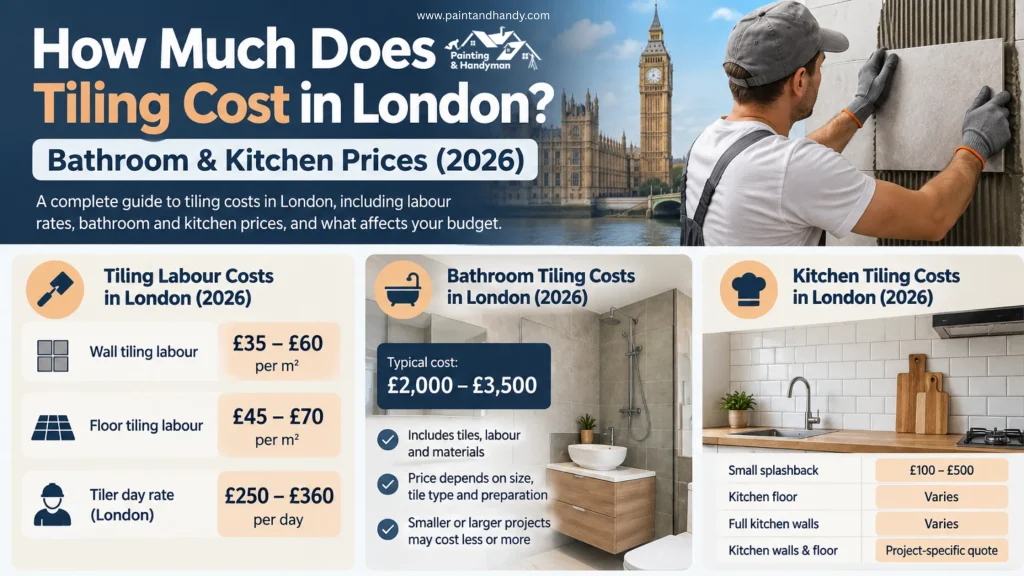
Planning to tile a bathroom, kitchen or floor and wondering how much a tiler will charge in London?
In 2026, standard wall tiling labour can cost around £35–£60 per m², while floor tiling labour may cost around £45–£70 per m². Supplied-and-fitted prices can be higher because they may include tiles, adhesive, grout and other materials. A full bathroom tiling project can cost several thousand pounds, depending on the size of the room and the work required.
These are guide prices, not fixed quotes. Your final tiling cost depends on the area, tile material, surface condition, layout and what the contractor includes in the price.
How Much Does Tiling Cost in London in 2026?
Tilers may charge by the square meter, by the day or at a fixed price for the whole project. The best way to compare quotes is to check exactly what each price covers.
| Type of tiling work | Indicative price |
| Standard wall tiling labour | £35–£60 per m² |
| Standard floor tiling labour | £45–£70 per m² |
| Supplied-and-fitted tiling | Around £55–£170 per m² |
| Experienced London tiler day rate | Around £250–£360 per day |
| Small kitchen splashback | Around £100–£500 |
| Medium bathroom tiling project | Around £2,000–£3,500 |
Sources: Loacally’s London bathroom tiling guide, Loacally’s tiler day-rate guide, London Refurbishments’ tiling cost guide and Checkatrade’s tiling cost guide.
These estimates use different pricing methods and may cover different amounts of work. For example, a labour-only quote is not directly comparable with a price that includes tiles and installation materials. Bathroom budgets can also include extra work such as removing old tiles, repairing walls and waterproofing wet areas.
What is included in a tiling quote?
Depending on the contractor and project, the price may include:
- Labour to measure, cut and lay tiles
- Tile adhesive and grout
- Spacers, trims and standard fixings
- Silicone sealant
- Basic surface preparation
- Supply of tiles
- Removal and disposal of old tiles
Not every quote includes all these items. Ask for a written breakdown before booking.
How Much Does It Cost to Tile a Bathroom in London?
Bathroom tiling costs depend on how much of the room you want to cover. Tiling a small area around a bath usually involves less work than tiling all the walls and the floor.
According to Loacally’s 2026 London bathroom tiling guide, a medium bathroom project using mid-range tiles may cost around £2,000–£3,500 for supplied-and-fitted work. Smaller projects may cost less, while premium tiles and extra preparation can increase the bill.
Example bathroom tiling budgets
| Bathroom project | Indicative budget |
| Small bathroom with ceramic tiles | £1,500–£2,200 |
| Small bathroom with mid-range porcelain | £2,000–£3,000 |
| Medium bathroom with mid-range porcelain | £2,000–£3,500 |
| Medium bathroom with premium or large-format tiles | £3,000–£5,000 |
These are example budgets from the same London pricing guide, not fixed prices for every bathroom. The actual area being tiled, tile selection and work included in the quote will affect the final cost.
What makes bathroom tiling more expensive?
Bathroom work often needs more preparation than tiling a dry area. Extra costs may arise from:
- Removing old tiles and adhesive
- Repairing damaged plaster or flooring
- Levelling uneven walls or floors
- Waterproofing showers and other wet areas
- Cutting tiles around taps, pipes, niches and fittings
- Installing mosaics or large-format tiles
- Replacing damaged boards or other base materials
Pay particular attention to waterproofing. Tiles and grout alone do not form a complete waterproof barrier. Ask your tiler what protection the shower or other wet areas need and whether this work is included in the quote.
For help choosing tiles for your bathroom, read Your Guide to Bathroom Tiling: What to Consider.
How Much Does Kitchen Tiling Cost in London?
Kitchen tiling prices depend on whether you are updating a splashback, tiling the floor or covering several walls.
A splashback behind a sink or cooker covers a smaller area than a kitchen floor. However, a small job may still involve measuring, surface preparation, cutting around sockets and finishing exposed edges.
Kitchen tiling price examples
| Kitchen project | Indicative cost or pricing guidance |
| Small splashback | Around £100–£500, depending on scope |
| Kitchen floor | Depends on floor area, tile choice and preparation |
| Full kitchen walls | Depends on the area and number of cuts |
| Kitchen walls and floor | Requires a project-specific quote |
The £100–£500 splashback estimate is a guide, not a guaranteed London price. For UK tiling price examples, see Less’s 2026 tiling cost guide.
For kitchen floors, compare the quoted price per square metre and check whether it includes floor preparation, adhesive, grout, trims and removal of the existing floor covering. A floor that needs levelling may cost more than one that is ready for tiling.
How does tile choice affect kitchen tiling costs?
The price of the tiles and the time needed to install them can both affect the total.
- Ceramic tiles: Often a lower-cost option for kitchen walls and splashbacks.
- Porcelain tiles: Available in many sizes and finishes for walls and floors.
- Natural stone: May cost more to buy and can need specialist care or sealing.
- Mosaic tiles: Small pieces can take longer to set out and grout.
- Large-format tiles: May need extra handling and a flatter surface for installation.
Choose tiles that suit the location, expected use and care requirements, rather than comparing purchase prices alone.
What Is the Tiling Price Per m²?
The tiling price per m² is the amount charged for each square metre of wall or floor covered. It is a useful way to compare quotes, provided you know what the rate includes.
For example, a labour rate of £50 per m² does not mean the same thing as a supplied-and-fitted rate of £100 per m². The second price may include the tiles and installation materials.
How to calculate the tiling area
Use this method to estimate the area that needs tiling:
- Measure the length of the wall or floor in metres.
- Measure the height or width in metres.
- Multiply the measurements.
- Add the areas together if you are tiling several surfaces.
Example: A kitchen wall is 3 metres long and 0.6 metres high.
3 m × 0.6 m = 1.8 m²
At a labour rate of £50 per m²:
1.8 m² × £50 = £90 in basic labour
This is only a simple calculation. A minimum charge, socket cuts, preparation, materials and finishing may increase the final quote.
How many extra tiles should you buy?
Allow extra tiles for cuts, breakages and future repairs. The quantity depends on the shape of the room, the size of the tiles and the chosen layout.
A straightforward layout may need less spare material than a diagonal or herringbone pattern. Ask your tiler or supplier to calculate the quantity before ordering, and keep spare tiles for later repairs.
What Affects the Cost of Tiling in London?
Two rooms with the same floor area can receive different quotes. The following factors can affect the price.
1. Tile material and size
Ceramic, porcelain, natural stone and mosaic tiles have different purchase prices and installation needs. Large or heavy tiles may need extra handling, while small patterned tiles often take longer to set out.
2. Surface preparation
The wall or floor beneath the tiles must be suitable for the chosen tile and adhesive. Loose plaster, uneven flooring, damaged boards and old adhesive may add labour and material costs.
3. Removing existing tiles
Removing old tiles can involve additional labour, waste disposal and repairs to the surface underneath. Check whether removal and disposal are included in the quote.
4. Waterproofing
Showers and other wet areas may need a suitable waterproofing system before tiling begins. The work required depends on the design, surface and condition of the area.
5. Tile layout and cutting
Straight rows of standard tiles are generally quicker to install than herringbone designs, mosaics or layouts with many corners and fittings. More detailed designs can increase labour time.
6. Property access
Parking restrictions, stairs, limited lift access and carrying materials through a London flat can affect the time needed for a job. Mention any access restrictions when requesting a quote.
7. Project size
A larger project may have a lower labour rate per square metre, but its total cost will be higher. Small jobs may also have a minimum charge.
Money-saving tip: Compare quotes on the same basis. Ask each tiler to list labour, tiles, adhesive, grout, surface preparation, tile removal and waterproofing separately. A lower headline price may leave out work you still need to pay for.
Is It Cheaper to Buy Tiles Yourself?
Buying tiles yourself can help you control your material budget, particularly if you have already selected a style and supplier. However, check the tiler’s requirements before ordering.
Keep these points in mind:
- Confirm that the tile material and size suit the surface.
- Order enough tiles for the measured area and cutting allowance.
- Check that the same batch or shade is available for the project.
- Confirm who supplies adhesive, grout, trims and sealant.
- Agree who is responsible if tiles arrive damaged or prove unsuitable.
A supplied-and-fitted quote may be easier to compare because it can cover more of the work in one price. Read the breakdown carefully, as different contractors may include different items.
How Long Does Bathroom or Kitchen Tiling Take?
The time needed depends on the area, tile format, surface condition and preparation required.
Checkatrade’s 2026 tiling cost guide estimates around three to four days for tiling a bathroom’s walls and floor. A small kitchen splashback may take much less time, while a larger bathroom with old-tile removal or extensive repairs may take longer.
Installation time is not always the same as the full project duration. Adhesive, grout, waterproofing products and other materials may need time to cure or dry before the next stage or normal use.
Ask your tiler for a schedule covering preparation, installation, finishing and any required waiting time.
How to Get a Tiling Quote from Paint & Handy
Before requesting a quote, prepare a few details about the work:
- Describe the area: Explain whether you need bathroom walls, a shower area, a kitchen splashback or floor tiling.
- Share measurements: Provide approximate dimensions or photographs of the area.
- Choose your tiles: Include the tile size and material if you have selected them.
- Explain the surface condition: Mention loose tiles, uneven surfaces, damaged plaster or old tiles that need removing.
- Ask what is included: Check whether labour, materials, preparation, waste removal and waterproofing are covered.
- Request a written quote: Confirm the price and planned work before booking.
Paint & Handy provides residential and commercial tiling services in London, including bathroom tiling, wall tiling, floor tiling and regrouting.
Learn more about the available work on the Tiling Services in London page. You can also view the Catford fireplace tiling project for an example of completed work.
Plan Your Tiling Budget Before Work Begins
The cost of tiling a bathroom or kitchen in London depends on more than the price of the tiles. Labour, preparation, tile removal, waterproofing, layout and property access can all affect the final bill.
Use the 2026 figures in this guide as a starting point, then request a quote based on your actual room and chosen materials. A clear breakdown helps you compare options and plan your budget.
Planning a bathroom, kitchen or floor-tiling project? Visit Paint & Handy’s Tiling Services in London or contact the team to discuss your project.
Frequently Asked Questions
1. How much does it cost to tile a bathroom in London in 2026?
A medium bathroom may cost around £2,000–£3,500 for a supplied-and-fitted project using mid-range tiles. Premium materials, old-tile removal and extra preparation can raise the total. These are guide prices from Loacally’s 2026 London bathroom tiling guide.
2. What is the average tiling price per m² in London?
Published guides suggest standard wall tiling labour of around £35–£60 per m² and floor tiling labour of around £45–£70 per m². Supplied-and-fitted prices can be higher because they include tiles and other materials. Always check the quote’s scope.
3. Is wall tiling cheaper than floor tiling?
It can be, but not in every case. Floor tiling may need levelling, while wall tiling can involve detailed cuts around sockets, taps and fittings. Tile choice, surface condition and layout affect the price.
4. How much does it cost to tile a kitchen splashback?
A small kitchen splashback may cost around £100–£500, depending on the area, tile choice, edge finishes and cuts needed. A minimum charge may apply to a small job. See Less’s tiling cost guide for UK price examples.
5. Are tiling labour costs separate from tile prices?
Often, yes. A labour-only quote covers installation, while tiles, adhesive, grout and trims may cost extra. A supplied-and-fitted quote combines some or all of these costs. Check the written breakdown before comparing prices.
6. Which tiles are usually cheaper to install?
Standard ceramic tiles are often less costly to buy than natural stone or some specialist tiles. However, installation costs also depend on tile size, layout, surface condition and the number of cuts needed.
7. Do bathroom tiles need waterproofing underneath?
Tiles and grout alone do not form a complete waterproof barrier. Showers and other wet areas may need a suitable waterproofing system beneath the tiles. Ask your tiler what protection is required for your installation.
8. How can I reduce my tiling costs?
Measure the area carefully, choose a practical tile layout, order the right quantity and agree on the work before it begins. Compare written quotes that cover the same tasks rather than choosing only by the lowest price per square metre.
