Finding a good handyman can save time, money, and stress. But booking the wrong one can lead to poor work, delays, and extra expense. This guide is written for homeowners, landlords, and tenants in London who need small repairs, painting, or general home upkeep.
After working in many London flats, houses, and rental properties, the same issues come up again and again. Asking a few clear questions before booking helps you avoid most of them.
Why asking the right questions matters in London homes
Many homes in London are older and need careful handling. Flats and shared buildings often come with access limits, noise rules, and tight time windows. Small jobs like painting or wall repairs can hide damp, cracks, or loose fittings. Not every handyman has the right background for these situations.
A short conversation before booking can make all the difference.
1. Do you have experience working in London properties?
Problem this avoids: poor workmanship and wrong methods
London homes vary a lot. A terraced house is very different from a flat in a shared block.
Ask about:
- Work in older buildings
- Experience with flats and shared walls
- Dealing with access limits and parking
Local experience matters because it reduces mistakes and delays.

2. What type of jobs do you usually handle?
Problem this avoids: booking the wrong person
Some handymen focus on one type of work only. Others handle a mix of jobs.
Check if they regularly do:
- Painting and decorating
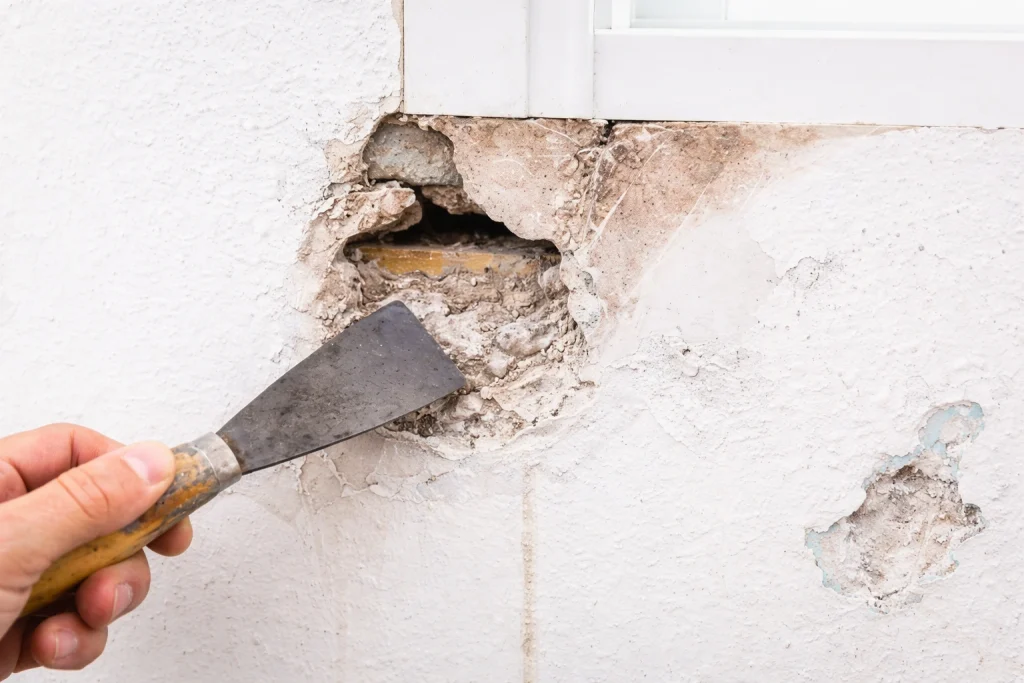
- Wall repairs and patch work
- Doors, fittings, and small fixes
Clear job scope at the start helps prevent confusion later.
3. Can painting and repairs be done together?
Problem this avoids: gaps between trades
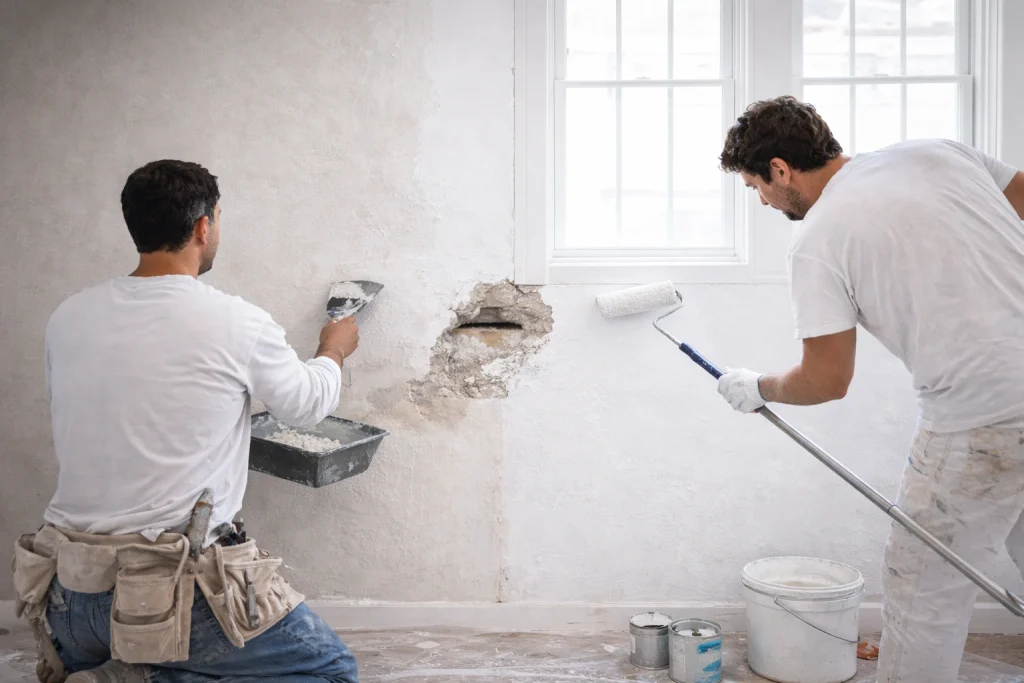
Walls often need fixing before painting. Cracks, damp marks, or loose plaster should be sorted first.
Ask:
- Whether repairs are done before paint goes on
- If one visit can cover both jobs
Doing this together usually saves time and repeat costs.
4. How is handyman work priced in London?

Problem this avoids: unexpected charges
Pricing can vary across London.
It helps to know:
- Is it hourly or a fixed price?
- What affects the cost in your home?
- Are materials included or extra?
Clear pricing before work starts avoids awkward surprises.
5. Are you insured to work inside homes?
Problem this avoids: risk and liability
Even small jobs carry some risk.
Insurance matters because:
- It protects your home
- It protects the worker
- It gives peace of mind
This is a simple question, but an important one.
6. Can you handle rental and landlord work?
Problem this avoids: delays and compliance issues
Rental properties often need work done to a deadline.
Ask about:
- End-of-tenancy repairs
- Pre-letting painting and fixes
- Working to agreed timeframes
This is especially useful for landlords and letting agents.
7. When can the work start, and how long will it take?

Problem this avoids: delays and rushed work
Clear timing helps everyone.
Check:
- The start date
- How long the job should take
- What happens if more work is needed
Rushed jobs often lead to repeat problems later.
8. What happens if an issue appears after the job is done?
Problem this avoids: lack of follow-up
Sometimes small issues show up after completion.
Ask about:
- Minor fixes after the job
- How to raise concerns
- Who to contact
Good communication after the job builds trust.
What can go wrong if you don’t ask these questions.
If you skip these checks, small problems can quickly turn into expensive ones. You might end up with unfinished work, paint that starts peeling within months, repairs that need multiple return visits, or unexpected costs added once the job is underway. A short, clear conversation before booking can prevent most of these headaches and save both time and money.
Quick checklist before booking a handyman

- Experience with London homes
- Clear job scope
- Simple pricing explanation
- Insurance cover
- Clear timeline
This checklist is useful to keep handy, especially on a busy day.
When a handyman is the right choice and when it’s not
A handyman is usually right for:
- Small repairs
- Painting and touch-ups
- General home upkeep
For larger or specialist work, a dedicated trade may be a better fit. Honest advice at the start helps you choose well.
Why local experience matters more than general experience
General experience is useful, but local experience in London makes a real difference. Homes here deal with shifting weather conditions, older construction materials, shared entrances in flats, and strict noise or timing restrictions. A handyman who understands how London properties are built and managed is far more likely to plan the job properly, avoid common access issues, and complete the work without unnecessary delays or disruption.
Final thoughts
Hiring the right handyman can save you from repeat repairs, wasted money, and unnecessary stress. Most problems in London homes do not start with the job itself. They start with poor communication before the work begins.
Take a few minutes to ask the right questions. It is a small step that can prevent bigger issues later.
A reliable handyman in London is not found by chance. They are chosen by asking clearly and listening carefully.
