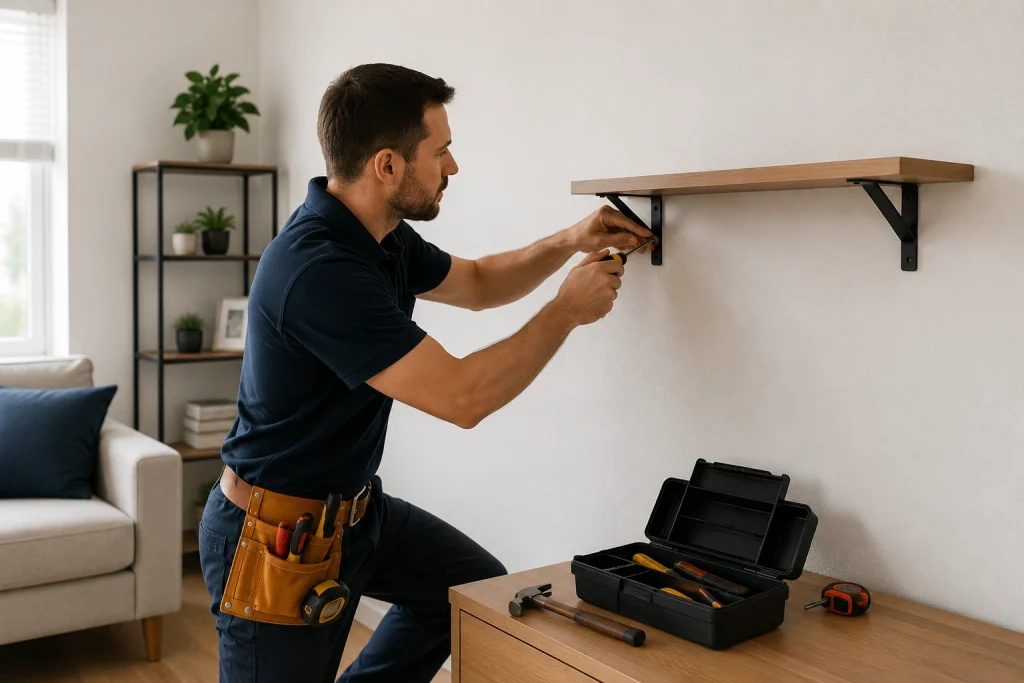
A handyman fixes, installs, and maintains small-to-medium jobs across a property without needing a separate specialist for each task. This handyman services guide breaks down the real scope of the trade for 2026, from shelf mounting to minor electrical fixes. London homeowners and landlords use handymen to save on call-out fees, since one visit can clear five jobs from a to-do list instead of booking five different tradespeople.
What Does a Handyman Do in London on a Typical Job?
A London handyman completes short repair and maintenance tasks in a single visit rather than a multi-day project. Most call-outs run between one and three hours and cover jobs a homeowner has been postponing for weeks.
Common tasks on a single visit include:
- Hanging shelves, mirrors, and curtain rails
- Fixing sticking doors and replacing hinges
- Patching small areas of plaster or drywall
- Assembling flat-pack furniture from IKEA or Wayfair
- Replacing tap washers and fixing minor leaks
- Sealing bath and shower edges with silicone
A single handyman visit in boroughs like Camden or Wandsworth typically clears a backlog of five to eight small jobs in one morning, based on typical job patterns across London trade platforms.
What Repair Tasks Fall Under Handyman Services?
Handyman repair work covers carpentry, general fittings, and light maintenance across a home. These jobs rarely need building control approval or a specialist certificate.
Typical repair categories include:
- Carpentry — skirting boards, door adjustments, cupboard hinges
- Fixtures — towel rails, blinds, TV bracket installation (within safe load limits)
- Wall and ceiling patching — filler work under 1 square metre
- Flooring fixes — loose laminate boards, squeaky floorboards
- Garden maintenance — fence panel repairs, gate realignment
A handyman working in a Victorian terrace in Hackney often spends more time on carpentry than a handyman in a 2020s new-build flat in Stratford, since older properties carry more warped frames and settled plaster.
Can a Handyman Handle Electrical Work Safely?
A handyman can carry out minor electrical tasks if they are competent, but UK Part P Building Regulations restrict certain work. Notifiable jobs such as new circuits, consumer unit replacements, and electrical work in bathrooms must be completed by a registered electrician.
Non-notifiable jobs a handyman can complete:
- Replacing a light fitting or pendant
- Swapping a broken 13A plug socket faceplate
- Fitting a battery-powered doorbell
- Replacing a switch on an existing circuit outside special locations
Any work involving new circuits, consumer unit (fuse board) replacement, or electrical installations in regulated bathroom zones falls under Part P of the Building Regulations. These jobs must comply with UK safety standards and either be carried out by a qualified electrician registered with a Competent Person Scheme or be inspected and approved by local building control.
For larger electrical work such as rewiring, new circuits, or consumer unit upgrades, hiring a certified electrician working to BS 7671:2018 (18th Edition Wiring Regulations) ensures the installation meets current safety requirements.
What Tools Does a London Handyman Bring to a Job?
A professional handyman carries a fixed core toolkit built for fast, single-visit repairs. The kit stays compact enough for a van but complete enough to avoid a second trip.
Core tools on a standard job:
- Cordless drill driver (18V, DeWalt or Makita class)
- Stud finder for stress-free shelf and TV bracket fitting
- Multi-bit screwdriver set and spirit level
- Silicone gun and filler knife for sealing and patching
- Voltage tester (non-contact, rated to 1000V) for safe socket checks
- Adjustable spanner set for tap washers and minor plumbing
A handyman without a stud finder risks mounting a shelf into plasterboard alone, which fails under load within weeks. Tool quality separates a one-visit fix from a callback.
What Qualifications Should a London Handyman Hold?
A reliable London handyman should carry public liability insurance and, ideally, a trade body membership. Certification matters most for jobs bordering electrical or gas work.
Checklist before hiring:
- Public liability insurance (minimum £1 million cover)
- DBS check, especially for jobs inside occupied homes
- Membership with a trade bodies such as Checkatrade, Rated People, or TrustMark
- Photo ID and a written quote before work starts
- Reviews on Checkatrade or Rated People with verified job photos
A handyman without insurance leaves the homeowner liable for accidental damage, which turns a minor job into a costly issue.
Which London Boroughs Do Handyman Services Cover?
Handyman services in London typically cover both inner boroughs and outer commuter zones within a single operating radius. Coverage usually spans a 10 to 15 mile service area from a central base.
Boroughs commonly served include:
- Westminster, Camden, and Islington (period conversions)
- Hackney and Tower Hamlets (Victorian terraces)
- Wandsworth and Richmond (family homes with gardens)
- Greenwich and Lewisham (mixed housing stock)
Response times inside Zone 1 to Zone 3 usually run same-day to next-day, based on typical scheduling patterns across London trade platforms in 2025. Our full handyman services in London page lists exact postcodes and turnaround windows.
Bringing It All Together
A London handyman closes the gap between DIY and a full specialist call-out, handling shelves, repairs, patching, and safe non-notifiable electrical fixes in one visit. Knowing where handyman work legally ends and specialist work begins protects both your home and your insurance. For a team that covers both sides under one roof, Paint and Handy books handyman and certified trade visits across London from a single call.
