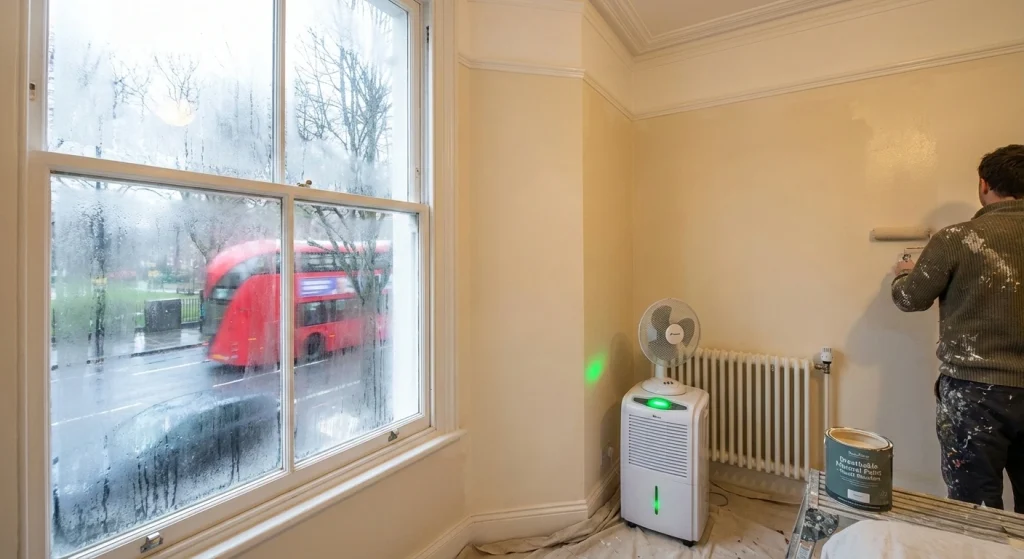
How does winter really feel inside a typical London home?
We have always seen how people beautify London in winter. While London in winter has many beautiful sights and scenes, it can also be uncomfortably cold and damp inside, especially with condensation on the glass, cold outside walls, dampness building up inside walls from moisture in the air building up in the flat, mould growing in areas that are hard to see due to furniture blocking them, etc.
Many London homeowners attempt winter time painting without realising how much the cold and humidity affect drying. Paint peels, bubbles, cracks… and then you end up repainting everything four months later. This is one of the most common issues we see during interior painting services in London during colder months.
This guide makes sure that doesn’t happen. It’s packed with real London experience, simple steps and tips that actually work
Let’s make your winter painting smooth, stress-free and long-lasting.
Why Paint Fails in London Homes During Winter
It could be new information that London isn’t just cold in winter, it’s wet, and the city stays 60-80% humidity. If winter time painting is unavoidable, controlling heat, humidity and airflow becomes essential.which means:
- Cold walls never fully dry
- Condensation forms daily from the heating cycles
- Older brick and plaster homes hold moisture for days
- Flats in Stratford, Croydon, Camden, Ilford and Wembley often have limited airflow
So yes… painting inside in the winter in London really is a difficult thing. A very common story we hear is
“Someone paints their bedroom in Hackney or Brixton in December… by February the paint is streaking, bubbling or peeling.”
That’s London humidity at work.
Common Mistakes Londoners Make in Winter Painting
House painting in winter requires a different approach compared to warmer months because London homes stay colder for longer periods. Here are the biggest reasons house painting in winter fails:
- Painting over damp or cold walls: When you paint over cold or damp walls, it can’t bond properly, so it gets peeled off.
- Using cheap paint unsuited to UK weather: choosing low-quality paint always results in problems with London’s humidity and temperature changes.
- Not checking for mould or hidden damp: the moisture beneath the paint will eventually become visible.
- Keeping windows closed so there’s no airflow: By closing the windows, the paint dries slowly and unevenly, causing streaks and smells.
- Overheating the room and drying paint too fast: The top layer dries too quickly, while the layers underneath stay soft.
- Skipping primer on old plaster: this makes the wall absorb paint unevenly, leaving patchy or dull spots.
- Ignoring cold exterior walls in terraced homes: These walls trap moisture, making paint fail sooner.
- Painting bathrooms/kitchens without moisture control: Steam and humidity stop the paint from drying properly.
- Not checking for lead paint in older homes: Disturbing old lead layers can be unsafe and requires proper treatment.
How to Check If Your Walls Are Ready?
Most problems with house painting in winter come from moisture trapped inside the walls. You need to know correctly whether your walls are ready for that. You don’t need fancy tools; just a few checks like these are enough:
- Touch test: If the wall feels colder than the room, it’s not ready.
- Moisture meter: £10–£15 at B&Q or Screwfix. Super handy.
- Tissue test: Tape a tissue to the wall overnight. If it’s damp in the morning, don’t paint.
- Look for mould spots or discolouration.
- Check behind sofas or beds near outside-facing walls.
Homes in Islington, Kensington, Ealing and Southwark especially struggle with cold external walls, so take extra care.
If moisture or damage is found, proper wall repairs and preparation work should be done before any paint is applied.
Best Paint Types for London Homes in Winter
| Paint Type | Best For | Why It Works |
| Vinyl Matt Paint | Living rooms & bedrooms | Works well on cold walls, hides marks, soft finish, dries steadily even with low airflow |
| Low VOC Paint | Small flats / rented rooms | Safe when windows stay closed, low smell, great for compact spaces |
| Mould-Resistant Paint | Bathrooms & kitchens | Stops mould coming back, handles steam and cold walls, ideal for north-facing rooms |
| Acrylic Matt Paint | Modern flats | Dries faster in winter, smooth finish, handles temperature changes well |
| Breathable Mineral Paint | Older London homes | Let’s plaster breathe, prevents peeling, great for Victorian/Georgian/Edwardian homes, good for basements & exterior walls |
| Avoid Gloss Paint in Winter | Most indoor winter projects | Dries very slowly, shows every flaw — not ideal for cold, humid rooms |
How to Prepare Different London Home Types
Different London homes behave differently in winter, so your painting approach needs to match the type of property you live in.
Victorian / Georgian Terraced Homes
Interior painting London homes in winter requires extra attention because of the city’s naturally high humidity. These homes with cold external walls and lime plaster hold moisture in winter. Breathing paints will help prevent peeling of these walls. Old structures tend to move, causing many small cracks.
Modern Flats (Stratford, Canary Wharf, Wembley)
Concrete flats in modern buildings have limited airflow, because of their use of cold, hard surfaces. As a consequence, moist paint and damp walls remain wet in winter longer than wood or brick walls. In addition, the paint smell lingers longer in winter.
Ex-Council Flats (Peckham, Bethnal Green, Camden Town)
Council flats that were built as Housing Authorities in the 1960s and 70s, tend to accumulate humidity due to their poor design and lack of ventilation. Using anti-mould paint on these properties will help to mitigate the effect of moist air and increase drying time for painted walls during the winter months.
Lofts & Basements
Both loft and basement areas are prone to trapping moisture, causing hot spots and cold spots. Therefore, mould-proof primer is very important for lofts and basements when painting indoors in winter.
Temperature, Humidity & Ventilation Guide
Anyone attempting house painting in winter should always check wall temperature and humidity first. For painting inside in the winter, here’s what works in London:
- Keep the room between 12–20°C: The ideal temperature for painting indoors is between 12°C and 20°C, which helps paint cure evenly. Warm up the room before starting to paint, and keep the temperature stable.
- Use a dehumidifier if the humidity goes above 60%: Run the dehumidifier for 20 to 30 minutes before painting, to remove moisture from the air, making it easier for the paint to dry properly.
- Open a window slightly for airflow: make the window open only for an inch so that air pass will be possible without losing any heat.
- Turn on extractor fans: Use an exhaust fan in either the bathroom or kitchen area to expel damp air to the outside of the building while you paint.
- Use a small oscillating fan: beware that the fan is pointed toward the middle of the room and not directed toward the wet wall, to make sure that the air is evenly distributed throughout the room.
- Avoid painting on heavy rain days: before starting to paint, check the weather forecast and if humidity is likely to be above normal, postpone painting until another time, as high humidity levels will slow down your progress.
- Don’t paint right next to hot radiators: When you paint directly next to a radiator, you will cause the paint to dry too rapidly on one side; therefore, it is advisable to run the radiator on low or turn it off altogether when painting.
- Keep doors open for circulation: Keeping the doors open will allow the warm, dry air from the other areas of the house to circulate into the area in which the paint is applied; therefore, assisting the drying of the paint properly.
Step-By-Step Winter Painting Routine
Winter time painting is possible, but only when the walls are warm, dry and properly prepared. Follow these simple steps to make winter time painting in a London home easier, safer, and far more reliable, even with cold walls and high humidity.
- Test walls for dampness: Make sure to check for dampness on the wall with a moisture meter or your hand before applying paint to it.
- Warm the room gently: Maintaining the ideal temperature for painting prevents bubbling, streaking and slow drying, providing a stable and comfortable environment throughout the painting process.
- Run a dehumidifier for 30–60 minutes: Using a dehumidifier for at least thirty minutes can help remove moisture from the air and help the paint cure properly.
- Use mould-resistant primer (Dulux Trade / Zinsser): This will provide additional protection from mould growth when temperatures drop during the winter months.
- Apply thin coats: Applying multiple thin coats of paint will provide good adhesion and will allow for smoother finishes in cooler temperatures. Thin coats tend to cure more quickly than thicker coats.
- Keep gentle airflow: Open windows slightly to allow airflow or use a small fan or heater to circulate warm air within the space.
- Don’t shut the room completely: The walls should be allowed time to breathe during drying and paint curing periods so that excess moisture can escape.
- Keep the temperature steady overnight: It will not help if you turn off the heating source too quickly because the cured paint will crack if it cools off suddenly.
- Check for streaks the next morning: Visually inspect for any areas that require filling in before re-coating so that all one-coat repairs can be completed before top coats are applied.
This is the safest way to do winter time painting without problems.
Problems You May Face & How to Fix Them
Here are the most common issues you might run into when painting damp or cold walls and the easiest ways to fix them.
| Problem | Solution |
| The wall is still damp | Let it dry fully, then scrape bubbles, seal, and repaint. |
| The air is too humid | Improve airflow and use a dehumidifier. |
| The wall is too cold | Warm the room evenly before and after painting. |
| Mould beneath paint | Clean and treat mould, then apply primer. |
| The paint is drying too slowly | Keep steady, gentle heating in the room. |
One of the biggest risks of painting inside in the winter is the build-up of condensation on cold exterior walls.
When You Should Not Paint in London in Winter
Avoid painting when:
- The wall feels damp to the touch.
- Indoor humidity stays above 70%.
- Small patches of mould are appearing.
- There’s no ventilation in the room.
- It’s a cold, north-facing wall.
- The home stays unheated throughout the day.
When to Call a Professional
If you’re dealing with hidden damp behind plaster, repainting an older Victorian or Edwardian home, or need safe lead paint removal, it’s a good time to call a professional. The same goes for flats with constant high humidity, rooms affected by water leaks, or any space that needs proper mould treatment. Large rooms with uneven temperature can also be tricky to paint in winter, and a pro can make sure the finish dries evenly and lasts.
For homeowners who want reliable help, Paint & Handy offers expert handyman and maintenance services across London, perfect for handling these tricky winter issues safely and properly.
Final Checklist for London Winter Painting
Before you start painting this winter, make sure you’ve ticked off each point on this checklist.
- Wall dry?
- Is the room warm and stable?
- Humidity under 60%?
- The right paint chosen?
- Ventilation sorted?
- Cold walls checked?
- Condensation controlled?
- Primer used?
Final Thoughts
London’s winter climate is tough on walls, damp, cold and always changing. Take 10 minutes to check the temperature, humidity and dryness of your walls before you start. It makes all the difference for house painting in winter or painting indoors during winter.
For interior painting, London residents often struggle with cold exterior walls, especially in older or north-facing rooms.
And if things feel too damp or too uneven to manage alone, a skilled painter and decorator in London can step in and sort it properly.
